

Capped Wood Fence: What It Is, Styles, Pros and Cons, Cost, and Why North Alabama Homeowners Love It
A capped wood fence is a style of wood privacy fence that adds a flat horizontal board across the top of all vertical pickets and a matching trim board across the bottom. This cap-and-trim design seals the exposed end grain of the pickets, which is the part of the wood most vulnerable to moisture and rot. Most North Alabama homeowners build their capped fences from cedar or pressure-treated pine at 6 feet tall. Installed cost in the Huntsville area typically runs $20 to $50 per linear foot, depending on wood species, fence style, and total project length.
We have been installing capped wood fences across North Alabama for more than six years. In that time, we have answered thousands of homeowner questions in Huntsville, Madison, Athens, Hampton Cove, and surrounding communities. This guide puts every answer in one place. By the time you finish reading it, you will know exactly what a capped wood fence is, whether it is the right choice for your yard, what it will cost, and what to expect from installation and maintenance.
The Basic Idea Behind a Capped Wood Fence
A capped wood fence seals the most vulnerable parts of your fence against moisture, improves structural strength, and gives you a finished look on both sides. It outlasts a standard wood fence by five to ten years when it is built right.
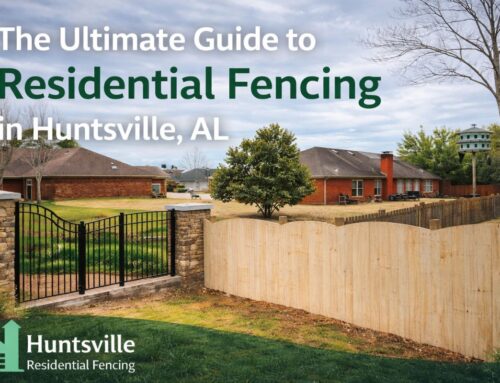
A capped wood fence gets its name from the cap board. A flat horizontal piece of lumber that runs across the very top of all the vertical pickets. Below the pickets, a matching board called the trim rail runs along the bottom, creating a clean frame around the entire fence panel.
Here is why that matters. Wood absorbs water through its end grain at a rate roughly 10 times faster than through its face. On a standard privacy fence, every picket top sits wide open to the rain. Every storm drives water straight into those cut ends, where it sits, swells, and starts the rot process. A cap board covers those ends entirely. It turns the rain away, keeps moisture out of the wood grain, and ties the whole fence together structurally in a way that a standard build cannot match.
The trim board at the bottom does the same job from the other direction. It shields the lower end grain of the pickets from ground moisture and soil contact, which are the two biggest rot triggers in a humid climate like North Alabama’s.
Put the two together, and you have what we call an enclosed picket system. Both ends of every vertical board are covered. The fence looks more polished, lasts longer, and handles storms better because of it.
How a Capped Wood Fence is Structured
Think of the fence as a picture frame built around a panel of vertical boards. The posts go into the ground and anchor everything. The horizontal rails hold the pickets in place. Once that skeleton is up, the cap board lies flat across the top of all the pickets, and the trim board runs along the bottom. Decorative post caps go on top of each fence post to seal those exposed ends, too.
From top to bottom, a fully built capped wood fence looks like this:
- Post cap: a decorative cap that seals the top of each fence post
- Cap rail: the flat board running across the top of all the pickets
- Top horizontal rail: structural support where the upper pickets attach
- Pickets: the vertical boards that do the actual privacy work
- Mid rail: an optional center rail that adds strength on taller or more exposed runs
- Bottom horizontal rail: structural support where the lower pickets attach
- Trim rail: the flat board running along the bottom of all the pickets
- Kick board: an optional rot-resistant board set at grade to take the abuse at the soil level
One thing homeowners always notice about a capped fence is that the post face is visible on both sides. Pickets center on the post rather than hiding behind them, so the fence looks just as finished from your neighbor’s yard as it does from yours. That is a detail people appreciate more than they expect.
4 Popular Capped Wood Fence Styles We Build Most in North Alabama
Capping is not a single fence style. It is a design principle you can apply to several different builds. Here are the four we put up most often for homeowners across the Huntsville area, and what makes each one worth considering.
1. Board-on-Board Capped Privacy Fence
This is our most requested capped fence style by a wide margin. The board-on-board design uses overlapping vertical pickets that alternate from one side of the rail to the other. That overlap means zero sightline through the fence, plus a shifting shadow pattern across the boards on a bright day that looks genuinely beautiful.
Adding a cap rail and trim to a board-on-board build takes it from a solid workman’s fence to something that looks more like architectural woodwork. These fences also handle wind better than most, because the overlapping boards spread storm pressure across the whole panel instead of loading it onto individual picket connections.
If you have a backyard, a pool, or an outdoor entertaining area you want to close off properly, this is the style we will probably recommend first.
2. Shadow Box Capped Fence
A shadow box fence puts alternating pickets on opposite sides of the rails with a consistent gap between boards. You get real airflow through the fence, and your neighbors cannot see clearly into your yard, even though the fence is not technically solid.
The reason this style comes up so often along shared property lines is simple: it looks the same from both sides. There is no raw rail face for your neighbor to stare at. Neither household gets the raw back of the fence. If you are building on a boundary you share with someone else, this is usually the most sensible choice, and most neighbors genuinely appreciate it.
3. Capped Picket Fence
A capped picket fence runs 3 to 4 feet tall and lives mostly in front yards, along driveways, and around garden beds. The classic dog-ear or pointed picket design has been around forever, and it looks perfectly fine on its own. But run a flat cap rail across the top of those pickets, and the whole thing shifts into a craftsman aesthetic that complements almost any North Alabama home style.
This style shows up a lot in older Huntsville neighborhoods where HOA rules call for a traditional, polished look, and standard picket fences just do not quite clear the bar.
4. Classic Cap and Trim Privacy Fence
This is the entry-level capped style and still a genuinely good fence. Standard-width pickets run edge to edge with no gap, and then the cap and trim boards go on top and bottom. It is the most straightforward version of the capped design and the most budget-friendly way to get the moisture protection and clean look that make capped fences worth building in the first place.
This style works well for side yards, utility areas, and homeowners who want a meaningful upgrade over a basic privacy fence without going all the way to a board-on-board build.
Capped Wood Fence Pros and Cons
We want you to make the right call for your property and your budget, so here is the honest side of this. A capped wood fence is the better long-term choice for most North Alabama homeowners. But it is not the right fit for every situation, and we will tell you when it is not.
| Where a Capped Fence Wins | Where It Falls Short |
| Seals exposed end grain against moisture | Costs more upfront than a standard privacy fence |
| Stronger overall, handles wind better | More wood surface means more to seal over time |
| Clean, finished look on both sides of the fence | Heavier build, so the post footings have to be right |
| Adds 5 to 10 years of useful life over uncapped wood |
The cap rail needs an experienced hand to run flat and true
|
| Plays well with HOAs, adds real curb appeal | More design choices upfront before the first post goes in |
| More ways to customize: post caps, trim cuts, lattice tops | A warped cap rail means replacement, not a patch job |
What That Actually Means for You
If you plan to stay in your home for more than five years and you want a fence that still looks sharp a decade from now without a string of repair bills, the extra upfront cost makes sense. If you need a short-term solution for a rental property or the budget is genuinely tight right now, a well-built standard privacy fence will serve you fine in the meantime.
Not sure where you land? Call us at +1 256 228 5770 between 9 AM and 5 PM, and we will talk it through with you based on your specific yard, your HOA situation, and what you are actually trying to accomplish.
Best Wood for a Capped Fence: Cedar or Pressure-Treated Pine?
The wood you choose matters more in North Alabama than it does in most parts of the country. Here is why, and here is how the two main options actually stack up.
Why Wood Species Matter More in North Alabama?
Huntsville receives about 55 inches of rain per year, well above the national average of 38 inches. Relative humidity in our area ranges from 73% to 80% throughout most of the year. On top of that, North Alabama falls squarely within what the fencing industry calls the Termite Belt, a band running across northern Alabama, Tennessee, and into Georgia and Mississippi, where subterranean termites are large-colony, year-round problems.
Drier climates give wood fence builders more margin for error. Here, choosing the wrong species or skipping proper treatment is not a slow mistake. It is a fast one. We have seen untreated posts fail in four years in the wrong conditions.
| Feature | Western Red Cedar | Pressure-Treated Pine |
| Installed Cost | $35 to $50 per linear foot | $20 to $35 per linear foot |
| Rot Resistance | Naturally high, no chemicals | High with UC4B rating, which ground-contact posts require |
| Look and Feel | Rich reddish grain, weathers to silver-gray | Light tan, takes stain well after a 6-month cure |
| Lifespan (capped) | 20 to 25+ years with proper sealing | 15 to 20 years with regular maintenance |
| Sealing Schedule | Every 3 to 5 years | Every 2 to 3 years |
| Termite Exposure | Moderate natural resistance | Low when treated with ACQ preservative |
| Best Fit | Homeowners who want maximum lifespan and natural beauty | Homeowners who want solid durability at a lower entry price |
Our Professional Recommendation
After six years of building wood fences across North Alabama, the combination we keep coming back to is cedar cap boards on pressure-treated pine pickets. You get cedar’s natural moisture resistance exactly where it matters most: on the cap board that takes the direct rain hit every single storm. The pickets, rails, and posts go in as pressure-treated pine, which keeps the overall project cost reasonable without cutting corners on what actually holds the fence together. It is not a compromise. It is a considered choice.
One thing worth knowing about pressure-treated pine: do not stain it right away. New treated lumber needs about six months to dry out before it will accept stain evenly. Plan your staining for the first spring after a fall installation, or the first fall after a spring build. Stain it too soon, and it will peel, which means it will require a second coat.
What About the Posts?
For any post going into the ground, we use pressure-treated lumber with a UC4B rating. That is the American Wood Protection Association designation for wood in direct soil contact. In Huntsville’s clay-heavy soil, which holds moisture against post bases for days after a good rain, anything rated lower is a mistake you will pay for later.
Good UC4B posts in concrete footings with proper drainage last 15 to 20 years in our soil. Set them shallow, skip the gravel drainage layer, or use lower-rated wood, and you are replacing posts in 8 years instead of 18.
How Much Does a Capped Wood Fence Actually Cost in North Alabama?
Quick Answer: A 6-foot capped wood privacy fence in the Huntsville area runs approximately $20 to $50 per linear foot, fully installed. Wood species, fence style, total project length, and site conditions all affect that number.
This is always the first real question, and it is the one you will not find a straight answer to from national guides. Those ranges are pulled from labor markets and material costs that have nothing to do with Huntsville. Here are the numbers when you call a North Alabama fence contractor.
Real Costs by Style and Project Size
| Fence Style | 100 Linear Feet | 150 Linear Feet | 200 Linear Feet |
| Board-on-Board Capped (cedar) | $3,500 to $5,000 | $5,250 to $7,500 | $7,000 to $10,000 |
| Board-on-Board Capped (pine) | $2,500 to $3,800 | $3,750 to $5,700 | $5,000 to $7,600 |
| Shadow Box Capped (cedar) | $3,200 to $4,500 | $4,800 to $6,750 | $6,400 to $9,000 |
| Shadow Box Capped (pine) | $2,200 to $3,500 | $3,300 to $5,250 | $4,400 to $7,000 |
| Capped Picket 4 ft. (pine) | $1,800 to $2,800 | $2,700 to $4,200 | $3,600 to $5,600 |
These figures reflect the complete installed cost, including materials, labor, post setting, and concrete, everything. They are based on standard residential lots across Madison County and the surrounding area. Unusual terrain, steep slopes, rocky soil, or extensive demo work on an old fence will add to the final number.
Additional Costs People Forget to Budget For
Gates
A standard single walk gate adds $200 to $500 to your project. A double drive gate runs $500 to $900, depending on width and hardware. If you need a gate, flag it upfront. A gate is not an afterthought in a fence quote: it changes post sizing, footing depth, and hardware costs.
Staining and Sealing
Professional staining runs about $1 to $3 per square foot of fence surface. On a 150-foot fence at 6 feet tall, figure $900 to $2,700. A lot of our customers handle their first sealing coat themselves, which is perfectly reasonable on a new fence. We recommend getting sealer on a cedar fence within 60 days of installation.
Permits
Standard residential fences under 6 feet in Huntsville usually do not need a permit. Fences at 6 feet on a corner lot, anything taller than 6 feet, or fences in some HOA communities are a different story. Permit fees in our area generally run $50 to $150. We always suggest confirming with the Huntsville Inspection Division before any work starts.
Removing the Old Fence
If there is an existing fence to pull out first, budget $3 to $6 per linear foot for tear-down and disposal. On a 150-foot run, that is $450 to $900 in demo costs before the new fence goes up.
How to Keep the Cost Down Without Hurting the Fence
- Longer fence runs cost less per foot: If you are fencing 200 linear feet or more, we can usually tighten the per-foot price because material purchasing gets more efficient at larger volumes.
- Book in the off-season: November through February is our slower stretch. Scheduling then can mean better availability and occasionally more competitive pricing.
- Use the hybrid approach: Cedar cap boards on treated pine pickets give you most of the longevity benefit of an all-cedar fence at a noticeably lower material cost.
- Hold off on the lattice top: It adds visual interest but also real cost. It can be added as a separate project later without affecting the fence at all.
The most accurate number for your specific property comes from having us walk it with you. We offer free quotes, no pressure, no obligation. Call us at +1 256-384-3619 or reach out online. We serve homes across North Alabama, from Huntsville and Madison to Athens, Hartselle, and Decatur.
How We Install a Capped Wood Fence: Eight Steps, No Shortcuts
Installing a capped fence correctly is not complicated, but it requires getting every step right. A cap rail that runs even slightly wavy across 200 feet of fence is the first thing anyone sees. It is also one of the biggest reasons homeowners hire a crew that has done this hundreds of times, rather than treating it as a weekend project.
Here is our process for every capped wood fence job across North Alabama.
Step 1: Walk the Property and Sort Out Permits
We start on the ground with you, walking your property line and talking through the layout. Where are the gates? Is there a slope we need to account for? What does your HOA require? Are there any underground utilities we need to mark before a single hole gets dug?
We call 811 on every project before post holes go in. It is free, it is required by Alabama law before any excavation, and it is the kind of thing that prevents an expensive surprise on day one.
If a permit is required for your fence, we walk you through what is needed before work starts. In most standard residential situations in Huntsville, a 6-foot wood fence set back from the property line correctly does not require a permit. But we confirm that before we assume it.
Step 2: Lay Out the Posts and Start Digging
Post locations get marked at 6- to 8-foot intervals along the fence line. Closer spacing costs more but adds real strength, something that matters in the parts of North Alabama that catch serious storm winds.
Post holes in our area go a minimum of 24 inches deep for a 6-foot fence. That is roughly a third of the total post length, plus a 6-inch gravel base at the bottom for drainage. Huntsville’s clay soil holds moisture against post bases for a long time after rain. Proper depth and that gravel layer are our answer to that.
We use mechanical augers on every project. It is faster, more consistent, and produces a cleaner hole than hand digging. Consistent hole diameter and depth mean consistent footing strength across the whole run.
Step 3: Set Posts and Wait for the Concrete to Cure
Each post goes in with a gravel base, gets plumbed in two directions, and gets braced before the concrete goes around it. We use a fast-setting mix that reaches working strength in about 24 hours under normal conditions.
We wait the full cure period before attaching anything. This is not a step we rush. Attaching rails to posts before the concrete has set is one of the most common shortcuts in fence work, and it almost always shows up later as alignment problems that nobody can fix without pulling posts.
Step 4: Run the Horizontal Rails
Once posts are set and cured, the horizontal rails go on. A 6-foot capped privacy fence gets three: top, middle, and bottom. We use galvanized screws throughout, never nails. In North Alabama’s humidity, nails pull loose over time as wood expands and contracts with moisture swings. Screws hold through that movement.
Bottom rail height matters here. If it sits too close to grade, the pickets will pull moisture out of the soil constantly. We aim for at least 2 inches of clearance between the bottom rail and the ground.
Step 5: Hang the Pickets
Pickets go on plumb and at consistent height. On a board-on-board build, the overlap amount gets marked and held consistent from the first board to the last. On a shadow box design, the gap spacing stays even across the entire run.
Before any picket goes up, we sight down the rail line. A fence that drifts slightly off-level over 100 feet is almost always the result of skipping that check at the start.
Step 6: Put the Cap Rail On Flat and Keep It That Way
This is the defining step of a capped fence, and the one where precision matters more than anywhere else. The cap board has to run perfectly flat and level across every picket for the entire fence length. If it dips or rises or catches a twist anywhere, it is what every person walking past your house will notice first.
We snap a chalk line across the top of all the pickets, check it at multiple points with a level, and trim any picket that is even slightly out before the cap goes on. The cap board overhangs the pickets by 1 to 1.5 inches on each side for a clean, finished edge. Galvanized screws go in at every picket.
Step 7: Trim Rail, Post Caps, and the Finishing Details
The bottom trim rail goes on with the same alignment approach as the cap. Then the post caps go on each fence post. Post caps seal the end grain at the top of every post, which is otherwise a slow rot entry point that most people do not notice until the post is already soft.
If you chose a decorative trim cut for the bottom of your cap board, we handle that cut before installation so it runs perfectly consistent across the whole fence.
Cut ends on cedar get sealed with end-grain sealer right after installation. Cut ends on pressure-treated pine get a penetrating sealer applied to all exposed surfaces.
Step 8: Final Walkthrough and Cleanup
Before we wrap up, we walk the fence line with you. We check that every post is plumb, every cap board runs flat, the gates swing and latch the way they should, and the overall result looks the way it should look.
All wood scraps and concrete materials come off your property. We leave you with written care instructions for your specific wood species and a note on when to schedule your first sealing or staining.
How to Maintain a Capped Wood Fence in North Alabama’s Climate
A capped wood fence takes less maintenance work than a standard privacy fence, but it is not maintenance-free. Here is what you need to do in our climate specifically, because the advice in most national guides was not written with 55-inch annual rainfall and year-round termite pressure in mind.
Why Our Climate Is Harder on Wood Than Most
Huntsville sits in a humid subtropical climate zone. We get about 55 inches of rain per year, well above the national average, and our humidity stays between 73% and 80% most of the year. Summer is hot and muggy. We get occasional winter freeze-thaw cycles that open cracks in wood surfaces and let moisture deeper into the grain.
A well-built capped fence already has an advantage here. The cap rail and trim board cover the most vulnerable parts of the wood. But the surface still needs attention over time, and the termite situation in this part of the state is not something you can ignore.
Your First Year: What to Do Right After the Fence Goes In
For pressure-treated pine, hold off on staining for six months. New treated lumber holds moisture from the treatment process, and sealing it too soon traps that moisture inside and prevents the stain from bonding. Plan to stain in your first spring if you installed in fall, or your first fall if you installed in spring.
For cedar, apply a penetrating wood sealer within 60 days of installation while the wood is still clean.
For both species, keep the ground around the fence base clear. Soil buildup against the bottom trim board, wet mulch piled against the posts, and dense vegetation against the fence base all hold moisture where you do not want it.
Your Annual Checklist (Do This Every Spring)
- Walk the fence line and look for boards that have shifted, cracked, or started to show soft spots. Soft spots on pickets can usually be replaced individually. Soft spots on posts are a different conversation.
- Test every post base. Push the tip of a screwdriver firmly against the wood at the soil line. Good pressure-treated wood will not give. If it sinks in, that post needs attention before the problem travels upward.
- Clear any debris off the top of the cap rail. Leaves and organic matter trap moisture on the wood surface and speed up weathering more than most people realize.
- Check gate hardware. Hinges and latches take more abuse than any other part of a wood fence. Tighten anything that has worked loose.
- Look at the base of the posts and the bottom trim rail for mud tubes. A pencil-sized mud tube running up a post is the most reliable early sign of subterranean termite activity.
When to Re-Seal and What to Use
Pressure-treated pine needs re-sealing every two to three years. Cedar can go three to five years between coats. Use a penetrating oil stain with UV inhibitors, not a film-forming paint. Paints peel off exterior wood that sees weather, and they do not let the wood breathe the way a penetrating product does.
Apply with a low-pressure garden sprayer or a brush and roller. Do not pressure wash the fence before staining. High-pressure washing strips the wood grain and actually opens the surface to faster moisture absorption. A light rinse with a garden hose is all the prep cleaning a wood fence needs.
The Termite Reality in North Alabama
North Alabama is in the Termite Belt, a band running across this part of the Southeast where subterranean termite colonies are large, active, and work all twelve months of the year. That is different from most of the country, where harsh winters knock termite activity back significantly each season.
Pressure-treated lumber holds termites off effectively when the chemical treatment is fresh, but it does not last indefinitely. The preservative slowly leaches out of the wood over years, especially in wet soil conditions. That is why annual inspection at the post base zone matters even on treated posts.
If you find mud tubes or soft wood with a hollow sound, call a licensed pest control professional and get the surrounding soil treated. Termites in a fence post will not stay in the fence post.
How Long Will Your Fence Posts Last?
This comes up in almost every conversation we have with homeowners. Here is the straightforward answer for North Alabama conditions:
- UC4B-rated pressure-treated pine, set in concrete with proper gravel drainage: 15 to 20 years in Huntsville-area clay soil.
- Cedar posts in ground contact: 10 to 15 years with regular maintenance.
- Untreated or low-grade pine: 5 to 8 years, sometimes shorter in low spots or areas with poor drainage.
The soil line is always where a post fails first. That zone alternates between wet and dry more than anywhere else on the post, and that cycling does more structural damage than staying consistently wet would. A proper concrete footing, a gravel drainage layer at the base, and that annual screwdriver test at the soil line are what determine whether your posts go 10 years or 20.
Capped Fence vs. Standard Wood Fence: Which is Right for You?
Before you make a final call, here is the side-by-side we walk every customer through.
| Feature | Standard Wood Privacy Fence | Capped Wood Fence |
| Picket top protection | Open to rain, absorbs moisture at cut ends | Cap rail deflects water away from end grain |
| Appearance | Functional, rails show on one side | Polished on both sides, no raw rail exposure |
| Overall rigidity | Standard | Cap rail ties all pickets together as one unit |
| Lifespan | 10-15 years (pine), 15-20 years (cedar) | 15-20 years (pine), 20-25+ years (cedar) |
| Cost | Lower upfront, similar long-term costs | 15-25% more upfront, fewer repairs over time |
| Wind performance | Moderate | Better, cap rail locks pickets in place |
| HOA reception | Usually accepted | Preferred by most North Alabama HOAs |
| Best situation | Short-term, rentals, tighter budgets | Long-term homeowners who want lasting value |
Which One Should You Build?
For homeowners planning to stay in their house for more than five years, the capped fence wins the financial argument almost every time. You spend 15% to 25% more upfront. In return, you get a longer-lived fence, fewer repair bills, a better-looking result on both sides of the property line, and a structure that handles North Alabama storms with noticeably more confidence.
For rental properties, transitional living situations, or genuinely tight budgets, a well-built standard privacy fence with quality materials is still a solid choice. We build both, and we will always give you our honest read on which one makes more sense for where you are right now.
Questions We Hear All the Time About Capped Wood Fences
These are the ones that come up on almost every job site conversation across Huntsville and the surrounding communities.
What is a capped wood fence?
A capped wood fence is a wood privacy fence that adds a flat horizontal board across the top of all the vertical pickets and a matching board along the bottom. That cap-and-trim setup seals the exposed end grain of the pickets against moisture and rot, improves the fence's overall rigidity, and gives it a finished look on both sides. It is the same style you may also hear called a cap and trim fence.
What is capping in fencing?
Capping in fencing means attaching a flat horizontal board across the top of vertical fence pickets. The cap board covers the cut ends of the pickets, which are the most moisture-vulnerable part of any wood fence. It is both a structural upgrade and a visual one.
What is a capped picket fence?
A capped picket fence is a decorative style, usually 3 to 4 feet tall, where a flat cap board runs across the top of standard pickets. It takes the traditional picket fence look and gives it a cleaner, more craftsman-style finish. You see this style a lot in front yards and along driveways in older Huntsville neighborhoods where the HOA or homeowner wants something more polished than a basic picket line.
What is cap and trim on a fence?
Cap and trim refers to both the top and bottom horizontal boards on a capped wood fence. The cap is the flat board that runs across the top of the pickets. The trim is the matching board that runs across the bottom. Together they enclose both ends of every picket, which is where wood is most vulnerable to the kind of moisture damage that starts the rot process.
How much does a capped wood fence cost in Huntsville, AL?
In the Huntsville area and across North Alabama, a professionally installed 6-foot capped wood privacy fence typically runs $20 to $50 per linear foot, depending on wood species, style, and project complexity. A 150-foot board-on-board capped cedar fence, as an example, generally lands somewhere between $6,000 and $8,500 for the full installed project. Call us at +1 256-384-3619 for a free quote based on your specific property.
How do you attach fence cap boards?
A fence cap board goes on by running a flat piece of lumber across the top of all the vertical pickets, centering it with a 1 to 1.5-inch overhang on each side, and driving galvanized screws in at every picket. Before it goes on, a chalk line is snapped across the picket tops to confirm everything runs level. Any pickets that are slightly off get trimmed flush before the cap goes down.
How long do wooden fence posts last in the ground in Alabama?
In North Alabama's clay soil, UC4B-rated pressure-treated pine posts set in concrete footings with proper drainage typically last 15 to 20 years. Cedar posts in ground contact run 10 to 15 years with regular maintenance. Untreated or low-grade wood posts often fail in 5 to 8 years in our humid conditions, particularly in areas with standing water or poor drainage.
What is the best protection for a wooden fence?
The strongest protection for a wood fence in North Alabama is a combination approach. Use a cap board to seal exposed end grain. Choose rot-resistant wood or properly rated pressure-treated lumber. Apply a penetrating oil stain with UV protection on a regular schedule. Set posts with concrete footings and gravel drainage. Keep soil and organic debris from building up against the fence base. No single product does all of that on its own.
What is the best thing to stop wood rot?
Moisture control is the answer. On a fence, that means sealing end grain with a cap and trim setup, applying a water-repellent penetrating sealant to all exposed surfaces on a consistent schedule, keeping the fence base clear of soil buildup and wet vegetation, and making sure post footings drain properly. Once rot takes hold in a post base, the only real fix is pulling and replacing the post.
How do I stop a wooden fence from rotting?
Start with the right materials: UC4B-rated pressure-treated posts, rot-resistant pickets in cedar or treated pine, and galvanized hardware throughout. Build a cap and trim fence so both ends of every picket are protected. Keep the fence base clear of soil buildup, mulch, and dense wet vegetation. Seal within the first year and re-seal every two to five years depending on your wood species. Do a screwdriver test at every post base every spring.
What are the three types of fences?
The three main categories are privacy fences, semi-private fences, and open fences. Privacy fences use solid boards for full visual coverage, typically at 6 to 8 feet tall. Semi-private fences allow partial visibility through the boards, like shadow box or picket styles. Open fences provide a boundary without much visual barrier, like split rail, chain link, or aluminum. A capped wood fence can be built in either privacy or semi-private configurations depending on the picket design.
Do I need a permit for a capped wood fence in Huntsville?
In most standard residential situations in Huntsville, a 6-foot wood fence set back correctly from property lines does not require a building permit. Corner lots, fences taller than 6 feet, and certain HOA communities are exceptions. Permit fees in our area generally run between $50 and $150 when they are required. We always recommend confirming with the Huntsville Inspection Division before any work starts.
What is a capped wood fence?
A capped wood fence is a wood privacy fence that adds a flat horizontal board across the top of all the vertical pickets and a matching board along the bottom. That cap-and-trim setup seals the exposed end grain of the pickets against moisture and rot, improves the fence's overall rigidity, and gives it a finished look on both sides. It is the same style you may also hear called a cap and trim fence.
What is capping in fencing?
Capping in fencing means attaching a flat horizontal board across the top of vertical fence pickets. The cap board covers the cut ends of the pickets, which are the most moisture-vulnerable part of any wood fence. It is both a structural upgrade and a visual one.
What is a capped picket fence?
A capped picket fence is a decorative style, usually 3 to 4 feet tall, where a flat cap board runs across the top of standard pickets. It takes the traditional picket fence look and gives it a cleaner, more craftsman-style finish. You see this style a lot in front yards and along driveways in older Huntsville neighborhoods where the HOA or homeowner wants something more polished than a basic picket line.
What is cap and trim on a fence?
Cap and trim refers to both the top and bottom horizontal boards on a capped wood fence. The cap is the flat board that runs across the top of the pickets. The trim is the matching board that runs across the bottom. Together they enclose both ends of every picket, which is where wood is most vulnerable to the kind of moisture damage that starts the rot process.
How much does a capped wood fence cost in Huntsville, AL?
In the Huntsville area and across North Alabama, a professionally installed 6-foot capped wood privacy fence typically runs $20 to $50 per linear foot, depending on wood species, style, and project complexity. A 150-foot board-on-board capped cedar fence, as an example, generally lands somewhere between $6,000 and $8,500 for the full installed project. Call us at +1 256-384-3619 for a free quote based on your specific property.
How do you attach fence cap boards?
A fence cap board goes on by running a flat piece of lumber across the top of all the vertical pickets, centering it with a 1 to 1.5-inch overhang on each side, and driving galvanized screws in at every picket. Before it goes on, a chalk line is snapped across the picket tops to confirm everything runs level. Any pickets that are slightly off get trimmed flush before the cap goes down.
How long do wooden fence posts last in the ground in Alabama?
In North Alabama's clay soil, UC4B-rated pressure-treated pine posts set in concrete footings with proper drainage typically last 15 to 20 years. Cedar posts in ground contact run 10 to 15 years with regular maintenance. Untreated or low-grade wood posts often fail in 5 to 8 years in our humid conditions, particularly in areas with standing water or poor drainage.
What is the best protection for a wooden fence?
The strongest protection for a wood fence in North Alabama is a combination approach. Use a cap board to seal exposed end grain. Choose rot-resistant wood or properly rated pressure-treated lumber. Apply a penetrating oil stain with UV protection on a regular schedule. Set posts with concrete footings and gravel drainage. Keep soil and organic debris from building up against the fence base. No single product does all of that on its own.
What is the best thing to stop wood rot?
Moisture control is the answer. On a fence, that means sealing end grain with a cap and trim setup, applying a water-repellent penetrating sealant to all exposed surfaces on a consistent schedule, keeping the fence base clear of soil buildup and wet vegetation, and making sure post footings drain properly. Once rot takes hold in a post base, the only real fix is pulling and replacing the post.
How do I stop a wooden fence from rotting?
Start with the right materials: UC4B-rated pressure-treated posts, rot-resistant pickets in cedar or treated pine, and galvanized hardware throughout. Build a cap and trim fence so both ends of every picket are protected. Keep the fence base clear of soil buildup, mulch, and dense wet vegetation. Seal within the first year and re-seal every two to five years depending on your wood species. Do a screwdriver test at every post base every spring.
What are the three types of fences?
The three main categories are privacy fences, semi-private fences, and open fences. Privacy fences use solid boards for full visual coverage, typically at 6 to 8 feet tall. Semi-private fences allow partial visibility through the boards, like shadow box or picket styles. Open fences provide a boundary without much visual barrier, like split rail, chain link, or aluminum. A capped wood fence can be built in either privacy or semi-private configurations depending on the picket design.
Do I need a permit for a capped wood fence in Huntsville?
In most standard residential situations in Huntsville, a 6-foot wood fence set back correctly from property lines does not require a building permit. Corner lots, fences taller than 6 feet, and certain HOA communities are exceptions. Permit fees in our area generally run between $50 and $150 when they are required. We always recommend confirming with the Huntsville Inspection Division before any work starts.
Ready for Your Free Capped Wood Fence Quote in North Alabama?
We have been building fences across North Alabama for more than six years. In that time, we have put in hundreds of capped wood fences in Huntsville, Madison, Hampton Cove, Athens, Hartselle, Decatur, and the communities around them. We know the soil conditions out here, the HOA requirements neighborhood by neighborhood, the permit process, and the weather every fence in this part of the state has to survive year after year.
When you call us, you talk to someone who has spent the last six years doing this work in your area. Not someone reading from a script. We come out, walk your property with you, listen to what you are actually trying to do, and give you a written quote with no surprises attached to it.
| Why Our Customers Keep Calling Us Back | Where We Work in North Alabama |
|
|
Call +1 256 228 5770 for a Free Quote
Monday through Friday, 9 AM to 5 PM | No Obligation | North Alabama’s Local Fencing Contractor